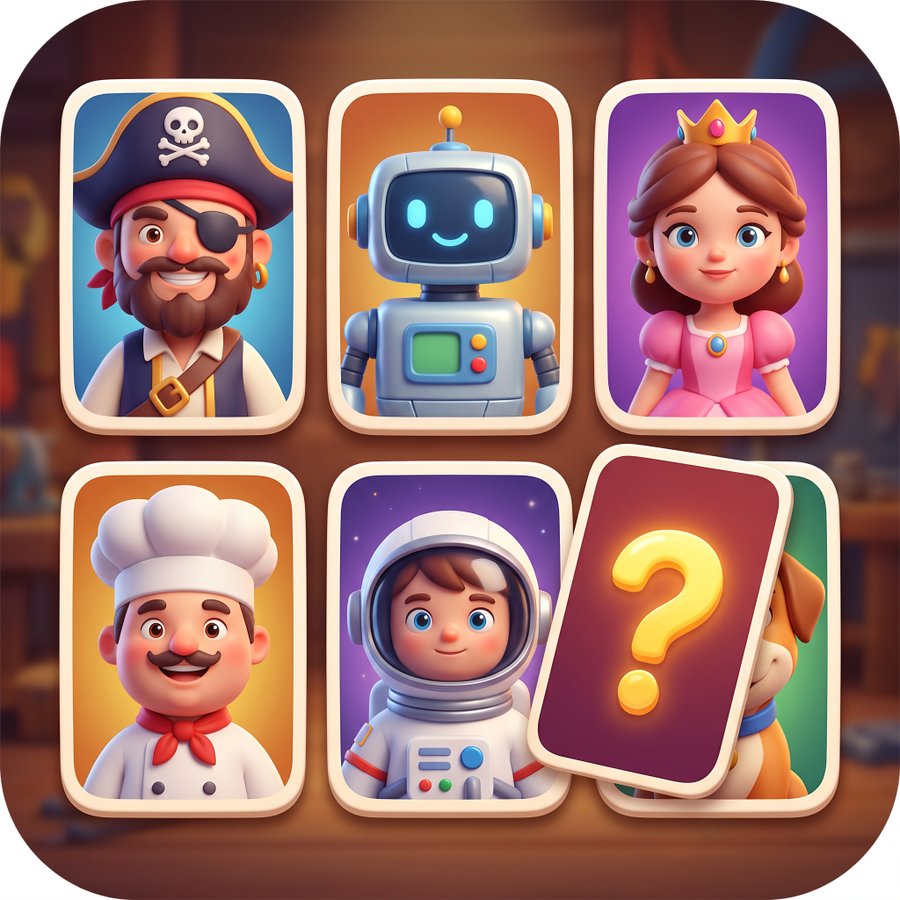
Guess Who?
Children ask their questions in English, “Does he have a hat?”, and find Merlin’s character before Merlin finds theirs.
HelloHai
Between 4 and 12, a child learns a language the way they learned their own: by talking with someone who answers. HelloHai gives them characters who get them talking every day, through play, without ever keeping their voice.
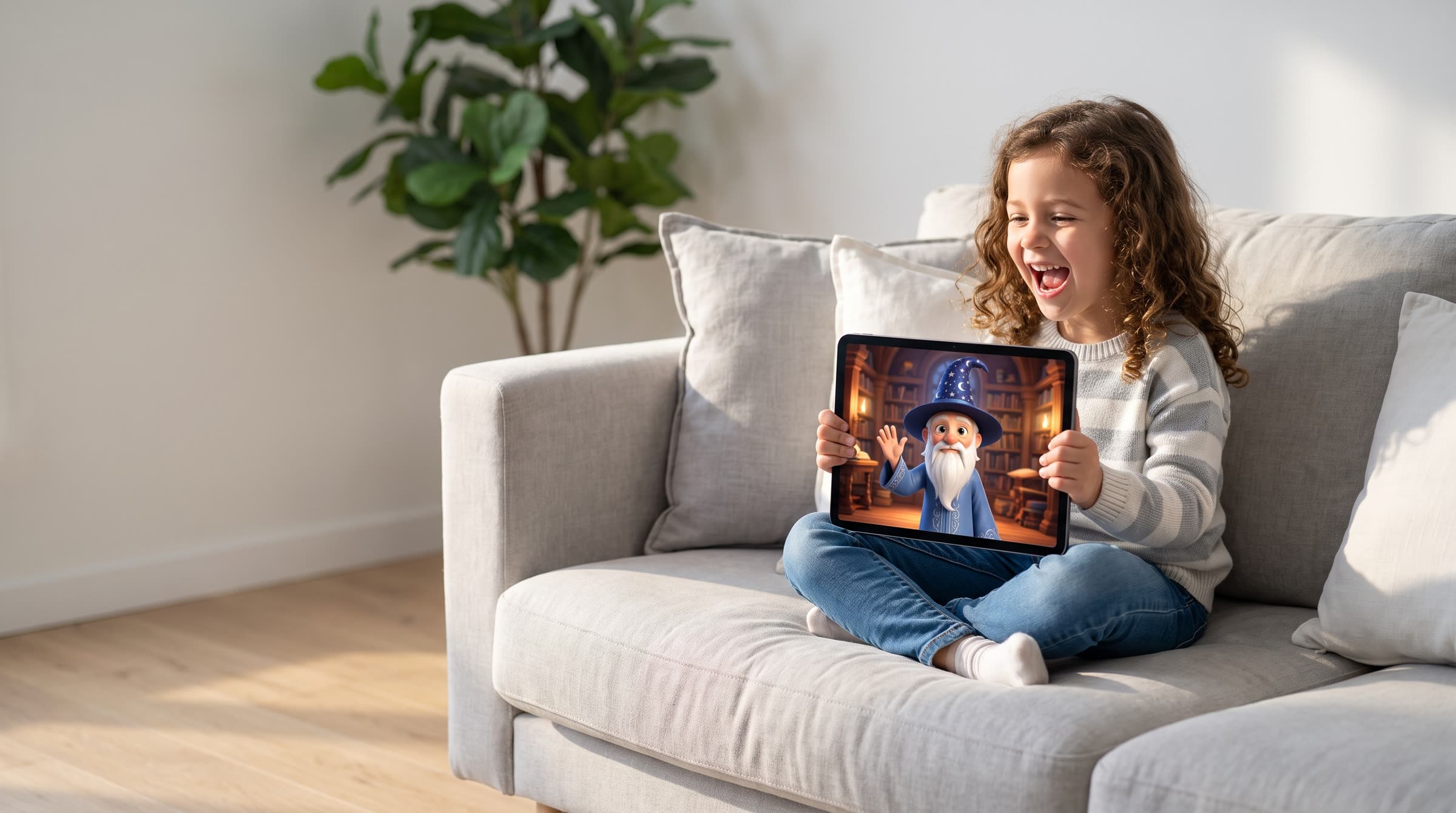
Between 4 and 12, the brain is ready. On one condition.
Between 4 and 12, a child’s brain is under construction, and language is its main building site. The areas that handle sounds, words, then grammar set one after the other around 8 to 10. Before that, a child makes the sounds and grammar of a language their own, like a native. After, they still learn, but with more effort.
What shapes this brain is not the language passing around the child, it is the conversation they hold. In children aged 4 to 6, nine weeks of more frequent exchanges were enough to thicken the language cortex.
Starting early is not enough: at an hour and a half a week, the lead is gone before fifteen. What counts is real exchange, a little every day. That is where the head start is taken.
At school
With HelloHai
Starting early, an hour and a half a week: the lead is gone by secondary school.
A little every day, in real exchange: what shapes the brain.
Thirty children, one adult: each one speaks for a few seconds.
A character all their own, who talks to them, listens and answers.
Pronunciation sets when nobody corrects it.
Every word listened to, the tricky sound said again as a game.
The fear of being wrong in front of others.
Getting it wrong is part of the game, nobody judges.
Apps that record their voice.
No child’s voice kept, data in Europe.
Their characters, ready to talk
The wise old wizard
He lives in his tower, knows a thousand stories and takes all the time a child needs to find their words.
 Hello!
It’s Story time
Picture books from age 4 and illustrated tales up to 10, read word by word by the characters. The child listens, follows the words as they light up, then says them in turn. Open a book to see. The whole library on HelloHai Kids
Luna and the Lost Boo
4-6 ans · 8 min · Halloween
Games
Here, you win by speaking. Quizzing Merlin, saying a word before the sand runs out, tapping the picture you just heard: every round is played in English, out loud. Three examples from the games in the Kids space. Play on HelloHai Kids
Children ask their questions in English, “Does he have a hat?”, and find Merlin’s character before Merlin finds theirs.
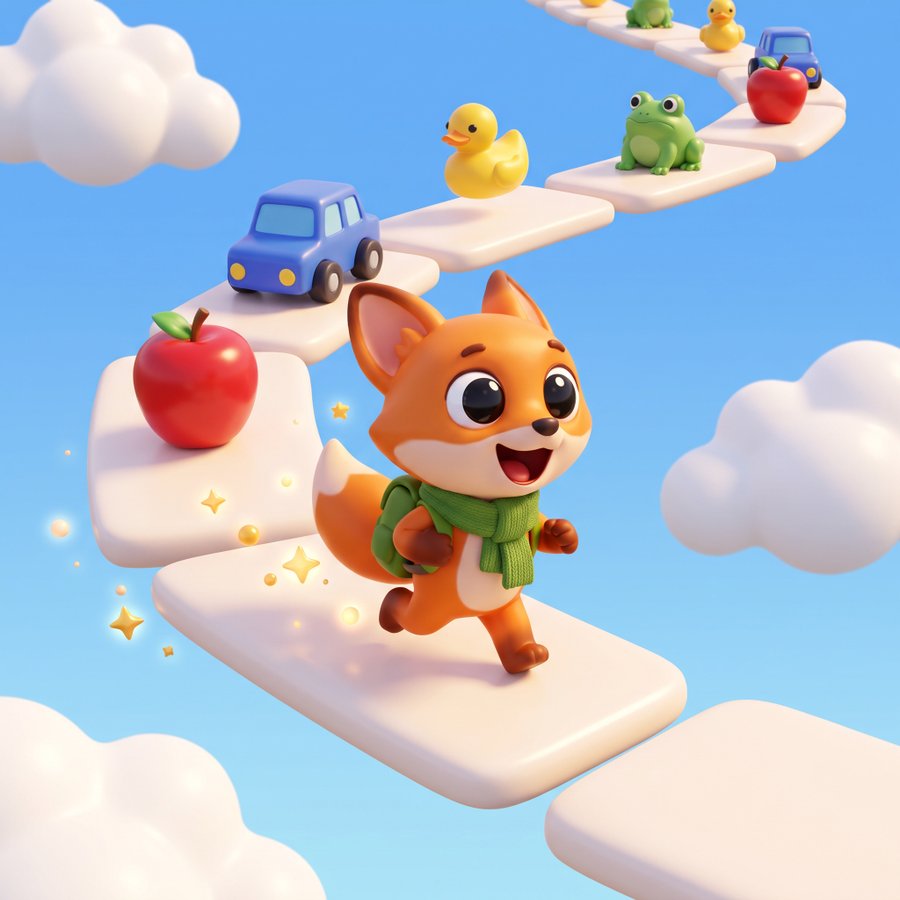
A picture, an hourglass: say the word in English before time runs out. The cards come faster and faster, with a record to beat.
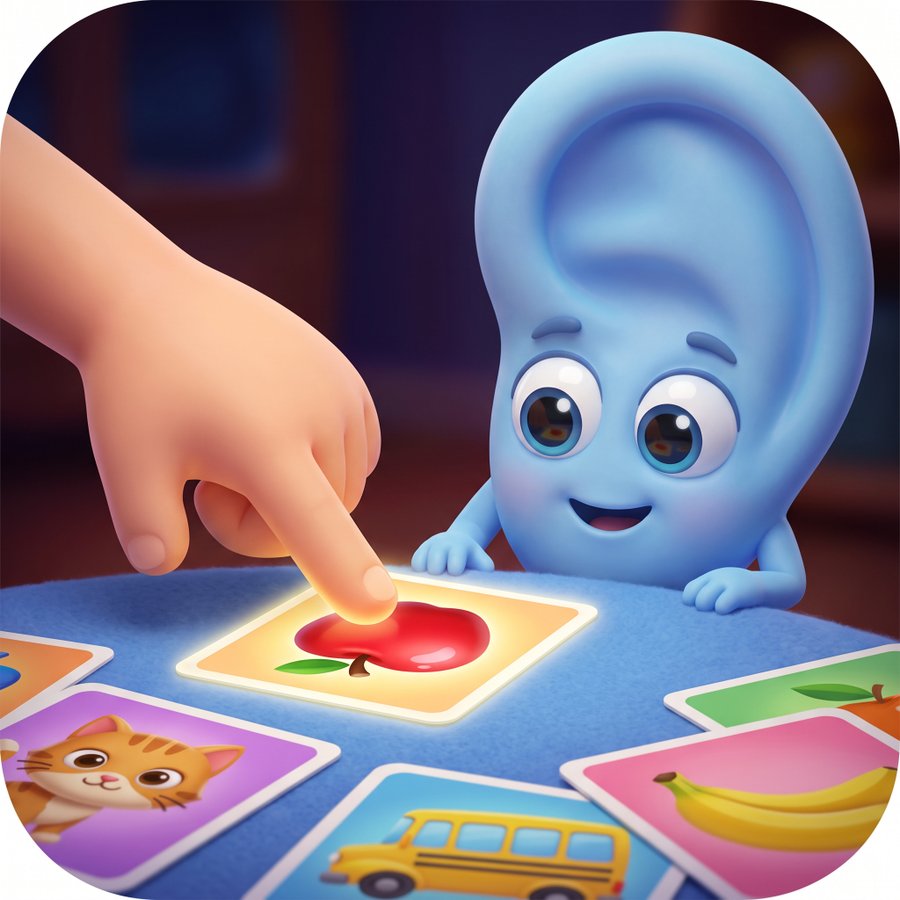
Princess Anna says a word in English and the child taps the right picture. No reading needed, and at the last level they repeat the word into the mic.
No commitment · €7.99 a month or €59 a year · See the Kids plans